What Is Staging? Dividing Clear Aligner Movements into Stages
Understand clear aligner staging, movement per stage, sequencing and anchorage with this practical guide for clinicians and dental technicians.
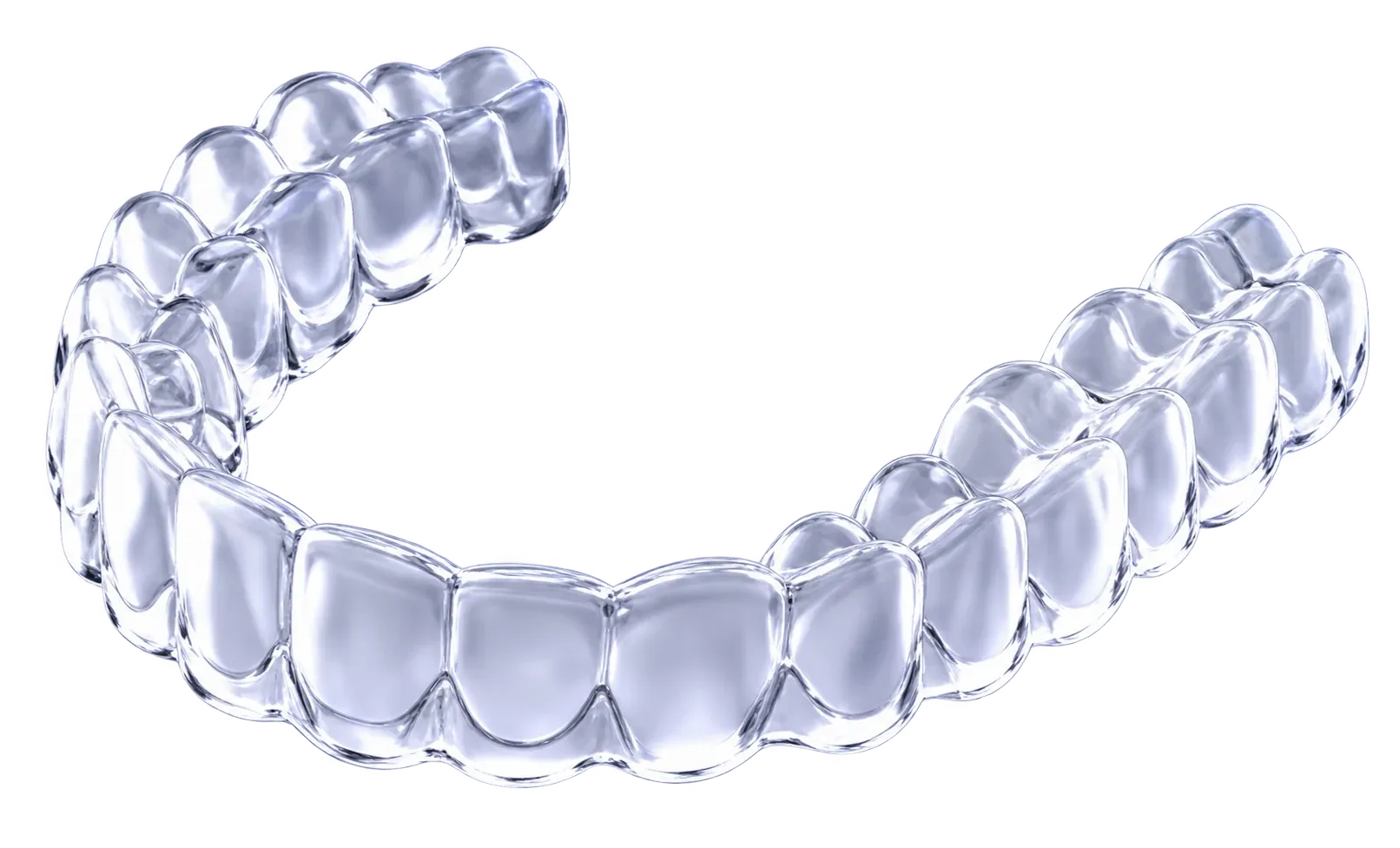
Staging divides the total tooth movement needed to reach a target setup into clear aligner stages. Each aligner differs slightly from the previous stage. The teeth follow these planned changes toward the target.
Why does staging matter?
A correct target setup alone is not enough for successful treatment. The order of movements and the amount of movement per stage also affect the result:
- If movement is planned too quickly, the aligner may fail to track the tooth and treatment can deviate from the plan.
- Unnecessarily slow planning increases the number of aligners and treatment duration.
- Incorrect sequencing can cause tooth collisions or loss of anchorage.
How much movement is planned per stage?
The following are commonly used starting values in clinical practice. They are not universal limits. They must be adjusted for factors such as tooth type, movement direction, attachments and periodontal condition.
| Movement | Typical starting value per stage |
|---|---|
| Translation (mesial/distal, buccal/lingual) | Approximately 0.20–0.25 mm |
| Rotation | Approximately 1–2° |
| Intrusion / extrusion | Approximately 0.10–0.20 mm |
| Torque / tip | In degrees, depending on the tooth and root length |
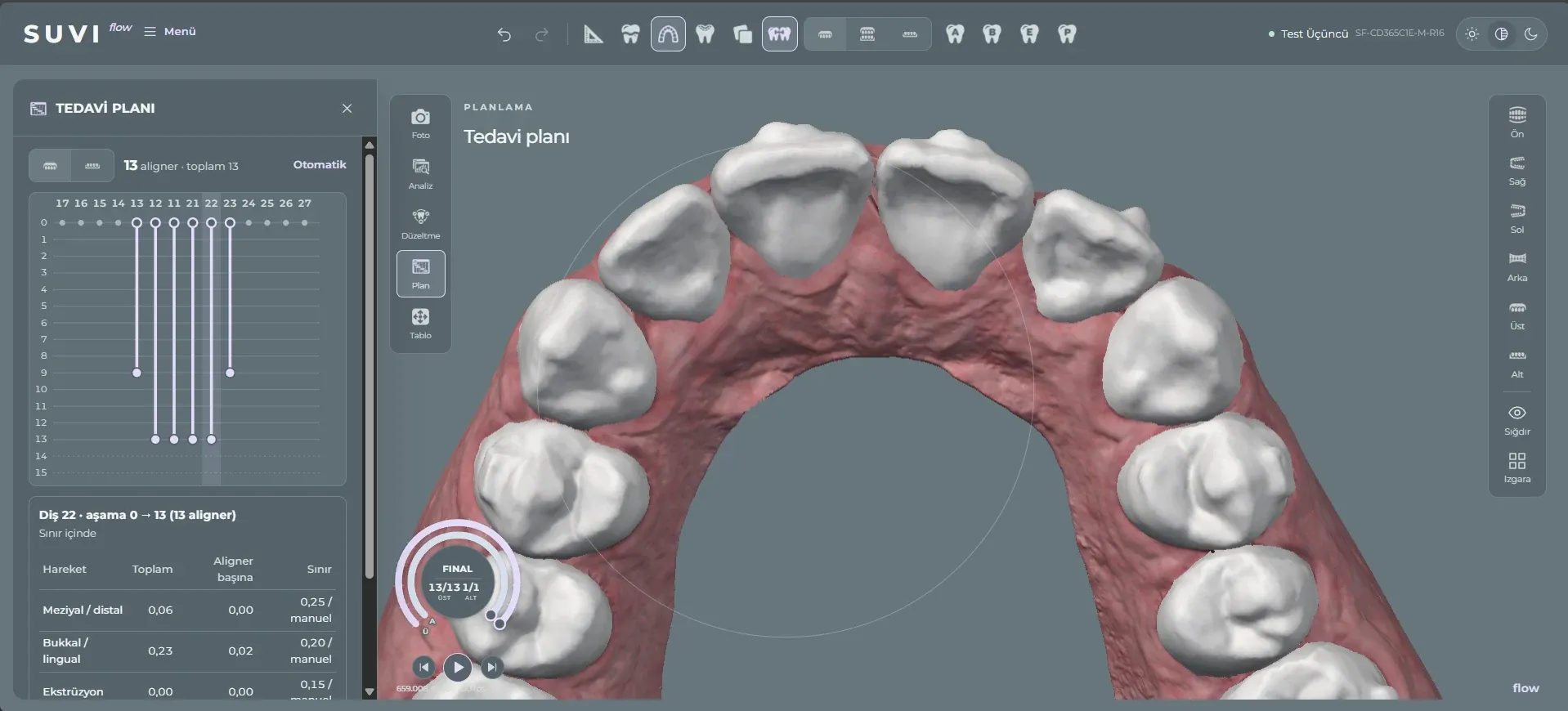
The movement budget module in Suvi Flow evaluates these values together according to tooth and movement type and flags exceeded limits. For further context, see the clear aligner guide.
Sequencing strategies
Create space before aligning
In crowded cases, space must be created before aligning the incisors. Space may be obtained through IPR, posterior distalization or arch expansion. Incisor movements are scheduled for the stages after space has been created.
Preserve anchorage teeth
Moving many teeth in the same stage reduces the number of stable teeth available for aligner retention. Alternating the groups of moving teeth helps preserve anchorage.
Pay attention to combined movements
Planning translation, rotation, tip, torque and intrusion together in a single stage increases the demand on a tooth. These combinations can be distributed across separate stages. Suvi Flow evaluates combined movements together and provides suggestions for potentially problematic combinations.
How is the total aligner count calculated?
For each tooth, the number of required stages is calculated by dividing the total movement by the permitted movement per stage. The tooth with the longest movement sequence, including any delayed start, determines the total number of aligners. A passive stage is often added at the end to allow the teeth to settle.
Where should staging be prepared?
- If your own team prepares the plan, Suvi Flow CAD supports the process with automatic staging and movement budget checks.
- If you delegate planning to us, our specialist team prepares staging through the Planning + Manufacturing service and submits it for your approval.
Frequently asked questions
What determines the total number of aligner stages?
The tooth that needs the most stages, based on its required movement and the movement allowed per stage, together with movement sequencing, determines the total aligner count.
Do all teeth move at the same time?
Not always. Some teeth move earlier and others later to create space, maintain anchorage or avoid collisions. This sequencing is part of the staging plan.
- #staging
- #clear-aligner
- #digital-planning
- #movement-budget