What Are Clear Aligners? A Digital Treatment Guide for Clinicians
Learn how clear aligner treatment works, from digital planning and staging to attachments and IPR, with a practical guide for clinicians.
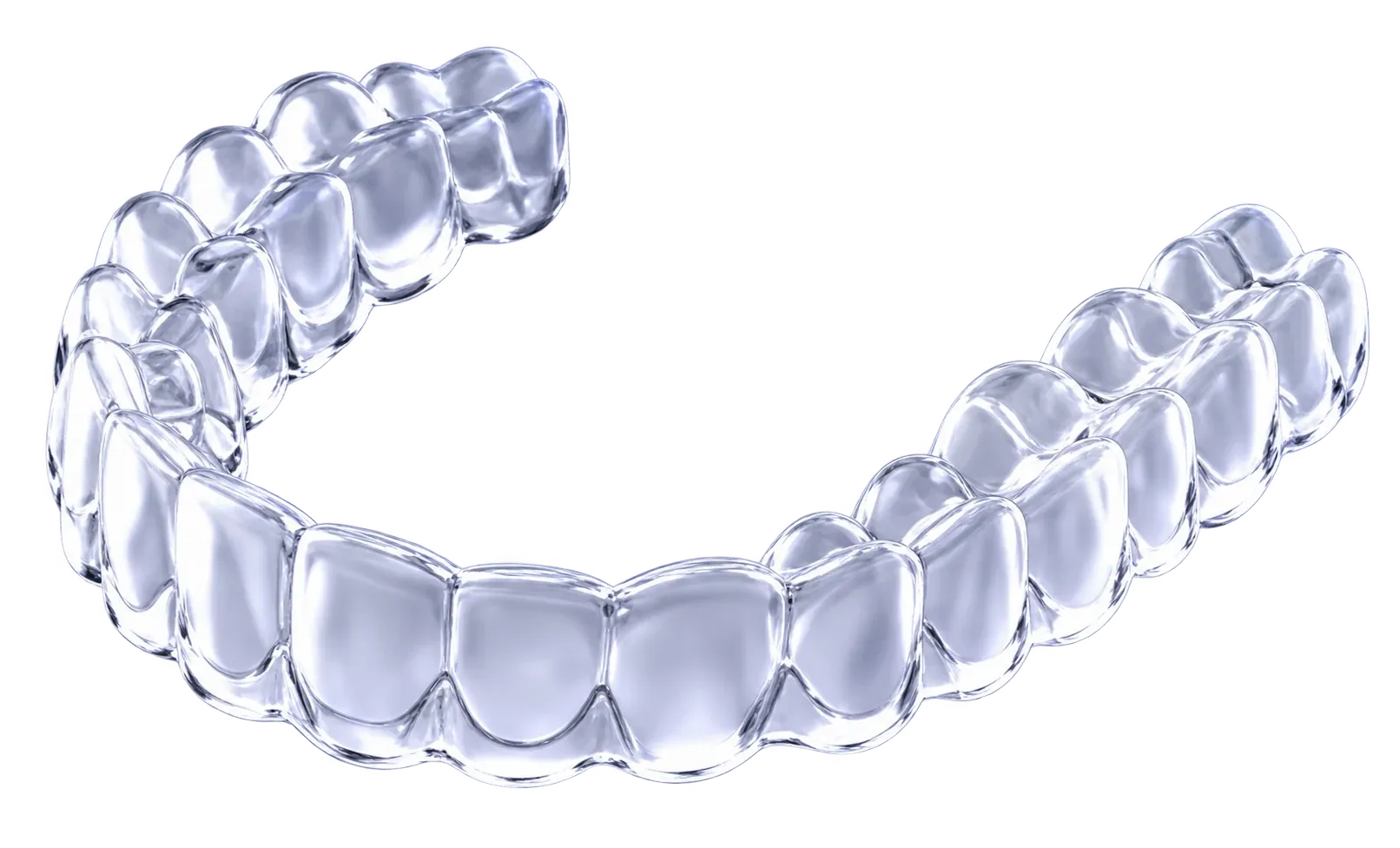
Clear aligner treatment is an orthodontic method that gradually moves teeth using custom-made, transparent and removable appliances. It does not use metal brackets and wires. Instead, treatment uses a sequence of aligners, each designed to advance the teeth by a small planned amount.
How does clear aligner treatment work?
Each aligner has a slightly different shape corresponding to the next planned tooth position. When worn, it applies gentle, sustained force to the teeth. As the surrounding bone remodels, the teeth move toward that position. The patient switches to the next aligner at prescribed intervals until the target arrangement is reached.
The quality of clear aligner treatment therefore depends substantially on the digital planning completed before the aligners are manufactured.
What are the steps in digital planning?
- Records: Intraoral scans (STL), intraoral and extraoral photographs, and panoramic radiographs where required.
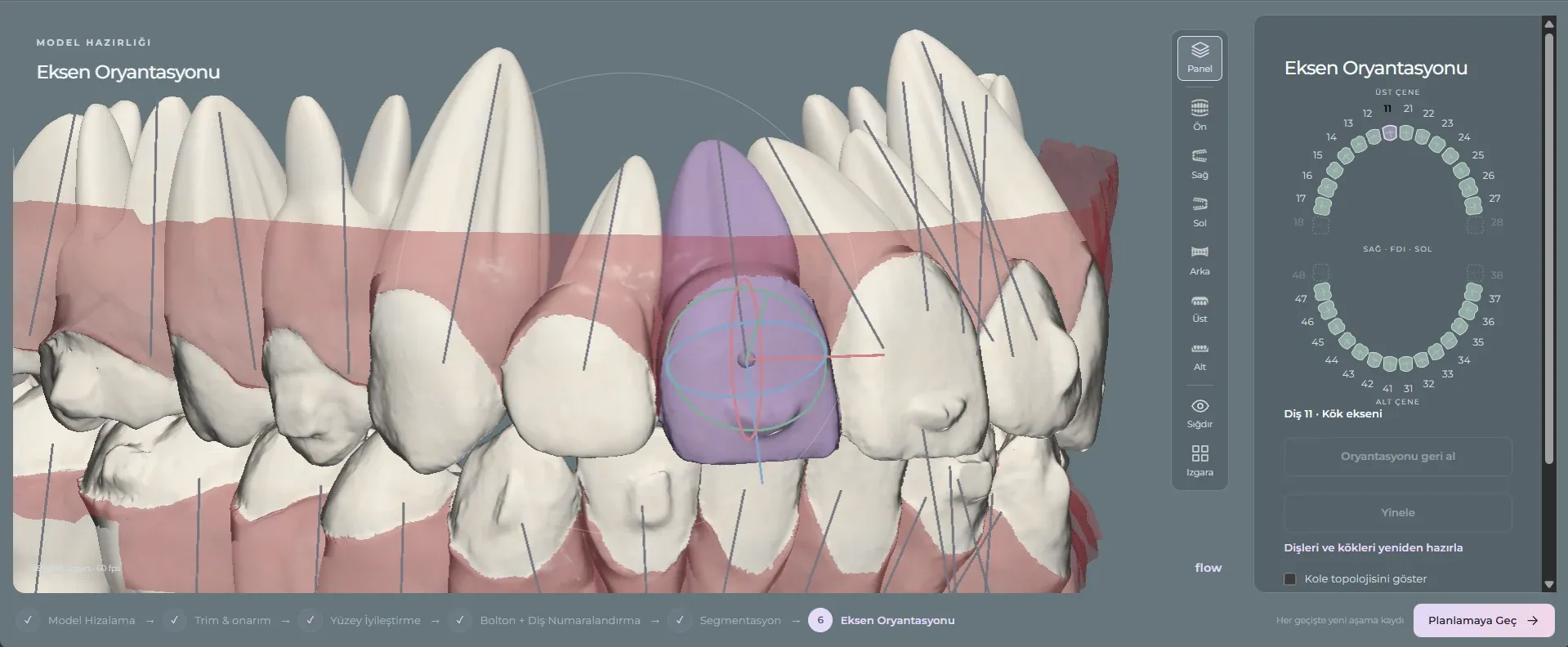
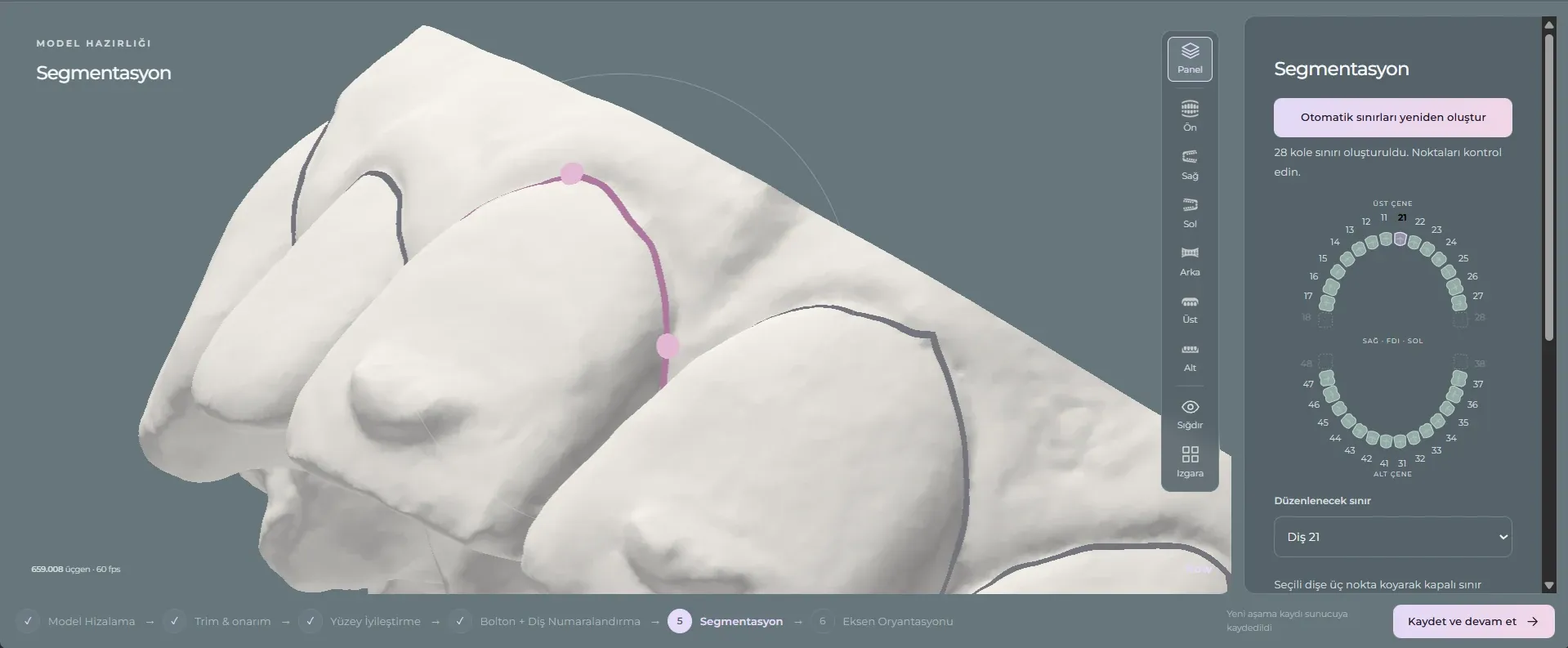
- Segmentation: Each tooth in the scan is identified as a separate object and assigned an FDI number.
- Target setup: Final tooth positions are defined according to the clinician’s treatment objectives.
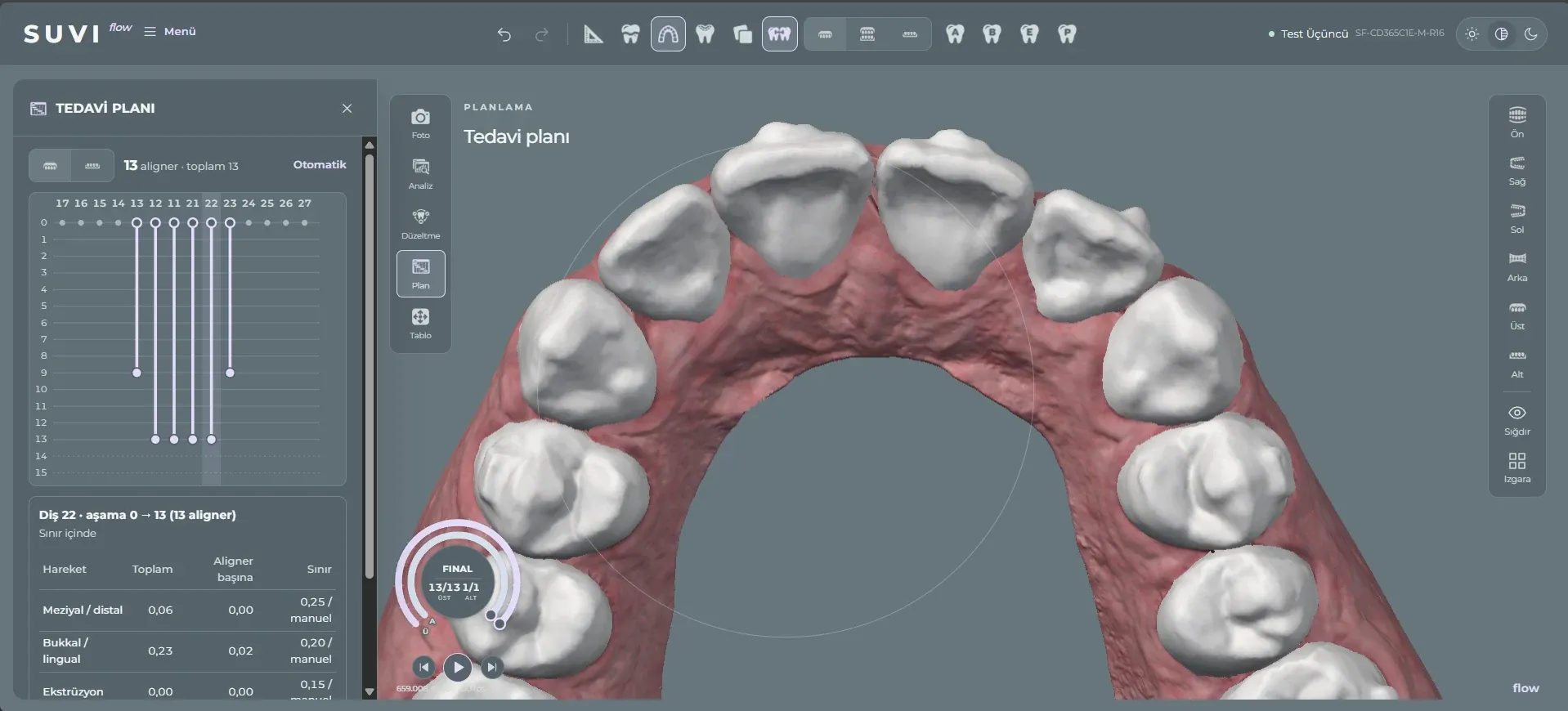
- Staging: Movement from the initial arrangement to the target is divided into stages. See the staging guide.
- Attachments and IPR: Attachments are added to the teeth that need them, and IPR is planned where space is required.
- Clinician approval and manufacturing: After the 3D preview is approved, the models for each stage are printed and the aligners are thermoformed.
How much movement is planned per stage?
There is no single movement value that applies to every patient and every tooth. Movement direction, tooth shape, space requirements and clinical conditions must be considered together. Numerical limits defined in CAD software should therefore not be interpreted as a guarantee of biological safety.
The clinician reviews intermediate stages and any required auxiliary procedures as part of the complete plan. The digital orthodontic planning guide explains this process from checking the records to manufacturing.
Why are attachments and IPR needed?
Attachments are small composite features bonded to the tooth surface to help the aligner engage the tooth more effectively. They help direct force, particularly during rotation, extrusion and root movement.
IPR (interproximal reduction) creates space by removing enamel from contact surfaces in increments measured in tenths of a millimeter. It may reduce the need for extractions in cases of mild or moderate crowding.
Who can be treated with clear aligners?
Mild to moderate crowding, diastemas and certain bite problems can be treated successfully with clear aligners. Complex skeletal cases may require other or combined approaches. The clinician determines suitability after examining the patient and reviewing the records.
Two options with SuviAligner
- To prepare your own plans, explore the Flow CAD software.
- To delegate planning and manufacturing to a specialist team, see the Planning + Manufacturing service.
Sources and scope
- American Association of Orthodontists — Clear Aligners: Treatment options and individual suitability assessment.
- American Association of Orthodontists — Clear Aligner Therapy: Digital records, movement planning and clinician supervision.
This article provides general information about digital planning and laboratory workflows. It does not replace individual diagnosis or treatment advice. For software selection, see the clear aligner design software guide.
Frequently asked questions
How long is each clear aligner worn?
Each aligner is generally worn for one to two weeks. The clinician determines the exact schedule based on the treatment plan and patient compliance.
What does staging mean in clear aligner planning?
Staging divides the total tooth movement between the initial and target arrangements into smaller steps for successive aligners.
- #staging
- #clear-aligner
- #digital-orthodontic-planning